
Class 11PhysicsNewton's Laws of Motion and FrictionMix Examples-Newton's Laws of Motion and Friction
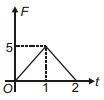
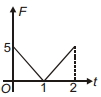
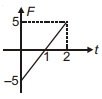
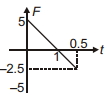
MediumIn which of the following graphs,the total change in momentum is zero?
- A
- B
- C
- D
Explore More
Similar Questions
Which of the following is not a method of reducing friction?
$A$ system consists of three masses $m_1, m_2$ and $m_3$ connected by a string passing over a pulley $P$. The mass $m_1$ hangs freely and $m_2$ and $m_3$ are on a rough horizontal table (the coefficient of friction $= \mu$). The pulley is frictionless and of negligible mass. The downward acceleration of mass $m_1$ is (Assume $m_1 = m_2 = m_3 = m$)
Difficult
View SolutionWhich one of the following is not used to reduce friction?
Easy
View SolutionIn the figures $(i), (ii)$ and $(iii)$ shown, the objects $A, B$ and $C$ have the same mass $m$. The string, spring, and pulley are massless. Object $C$ strikes object $B$ with velocity $u$ in each case and sticks to it. Find the ratio of the velocity of $B$ in case $(i)$ to $(ii)$ to $(iii)$.
Difficult
View Solution$Assertion$ : $A$ man and a block rest on a smooth horizontal surface. The man holds a rope which is connected to the block. The man cannot move on the horizontal surface.
$Reason$ : $A$ man standing at rest on a smooth horizontal surface cannot start walking due to the absence of friction (The man is only in contact with the floor as shown).
$Reason$ : $A$ man standing at rest on a smooth horizontal surface cannot start walking due to the absence of friction (The man is only in contact with the floor as shown).
Vedclass Products
For Students
Vedclass Test Series
Mock tests in real JEE/NEET style with performance analysis. 5-day free trial.
Start Free TrialFor Teachers
Exam Paper Generator
Generate Set A/B/C/D exam papers from 7.5L+ questions in 2 minutes. 3 chapters free.
Try FreeFor Institutes
Online Exam Module
Live online exams with unlimited students, 360° analytics & white-label branding.
See Demo