
Match the functions of List $I$ with the items of List $II$.
List $I$ List $II$ $A. 3x^4 - 2x^3 - 6x^2 + 6x + 1$ $(I)$ has minimum value at $x = 4$ $B. x + \frac{1}{x}, \forall x < 0$ $(II)$ has maximum value at $x = -1$ $C. x^4(7 - x)^3$ $(III)$ has maximum value at $x = 4$ $D. x^4 + (8 - x)^4$ $(IV)$ is decreasing in $[2, \infty)$ $(V)$ is increasing in $[2, \infty)$
| List $I$ | List $II$ |
| $A. 3x^4 - 2x^3 - 6x^2 + 6x + 1$ | $(I)$ has minimum value at $x = 4$ |
| $B. x + \frac{1}{x}, \forall x < 0$ | $(II)$ has maximum value at $x = -1$ |
| $C. x^4(7 - x)^3$ | $(III)$ has maximum value at $x = 4$ |
| $D. x^4 + (8 - x)^4$ | $(IV)$ is decreasing in $[2, \infty)$ |
| $(V)$ is increasing in $[2, \infty)$ |
- A
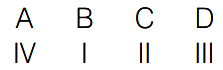
- B
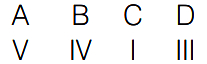
- C
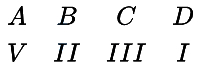
- D
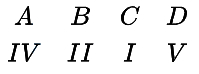
Explore More
Similar Questions
If $f(x)=\int_0^x e^{t^2}(t-2)(t-3) dt$ for all $x \in(0, \infty)$,then
$(A)$ $f$ has a local maximum at $x=2$
$(B)$ $f$ is decreasing on $(2,3)$
$(C)$ there exists some $c \in(0, \infty)$ such that $f^{\prime \prime}(c)=0$
$(D)$ $f$ has a local minimum at $x=3$
$(A)$ $f$ has a local maximum at $x=2$
$(B)$ $f$ is decreasing on $(2,3)$
$(C)$ there exists some $c \in(0, \infty)$ such that $f^{\prime \prime}(c)=0$
$(D)$ $f$ has a local minimum at $x=3$
DifficultIIT 2012
View SolutionIf $(x-a)^{2}+(y-b)^{2}=c^{2},$ for some $c > 0,$ prove that $\frac{\left[1+\left(\frac{d y}{d x}\right)^{2}\right]^{\frac{3}{2}}}{\frac{d^{2} y}{d x^{2}}}$ is a constant independent of $a$ and $b.$
Difficult
View Solution$f(x)=4 \log _{e}(x-1)-2 x^{2}+4 x+5, x>1$,which one of the following is $NOT$ correct?
DifficultJEE MAIN 2022
View SolutionLet $f(x)=2^x-x^2, x \in R$. If $m$ and $n$ are respectively the number of points at which the curves $y=f(x)$ and $y=f^{\prime}(x)$ intersect the $x$-axis,then the value of $m+n$ is
DifficultJEE MAIN 2024
View SolutionConsider the polynomial $f(x)=1+2x+3x^2+4x^3$. Let $s$ be the sum of all distinct real roots of $f(x)$ and let $t=|s|$.
$1.$ The real number $s$ lies in the interval
$(A)$ $\left(-\frac{1}{4}, 0\right)$ $(B)$ $\left(-1,-\frac{3}{4}\right)$
$(C)$ $\left(-\frac{3}{4},-\frac{1}{2}\right)$ $(D)$ $\left(0, \frac{1}{4}\right)$
$2.$ The area bounded by the curve $y=f(x)$ and the lines $x=0, y=0$ and $x=t$,lies in the interval
$(A)$ $\left(\frac{3}{4}, 3\right)$ $(B)$ $\left(\frac{21}{64}, \frac{11}{16}\right)$
$(C)$ $(9,10)$ $(D)$ $\left(0, \frac{21}{64}\right)$
$3.$ The function $f^{\prime}(x)$ is
$(A)$ increasing in $\left(-t,-\frac{1}{4}\right)$ and decreasing in $\left(-\frac{1}{4}, t\right)$
$(B)$ decreasing in $\left(-t,-\frac{1}{4}\right)$ and increasing in $\left(-\frac{1}{4}, t\right)$
$(C)$ increasing in $(-t, t)$ $(D)$ decreasing in $(-t, t)$
Give the answer for questions $1, 2$ and $3.$
$1.$ The real number $s$ lies in the interval
$(A)$ $\left(-\frac{1}{4}, 0\right)$ $(B)$ $\left(-1,-\frac{3}{4}\right)$
$(C)$ $\left(-\frac{3}{4},-\frac{1}{2}\right)$ $(D)$ $\left(0, \frac{1}{4}\right)$
$2.$ The area bounded by the curve $y=f(x)$ and the lines $x=0, y=0$ and $x=t$,lies in the interval
$(A)$ $\left(\frac{3}{4}, 3\right)$ $(B)$ $\left(\frac{21}{64}, \frac{11}{16}\right)$
$(C)$ $(9,10)$ $(D)$ $\left(0, \frac{21}{64}\right)$
$3.$ The function $f^{\prime}(x)$ is
$(A)$ increasing in $\left(-t,-\frac{1}{4}\right)$ and decreasing in $\left(-\frac{1}{4}, t\right)$
$(B)$ decreasing in $\left(-t,-\frac{1}{4}\right)$ and increasing in $\left(-\frac{1}{4}, t\right)$
$(C)$ increasing in $(-t, t)$ $(D)$ decreasing in $(-t, t)$
Give the answer for questions $1, 2$ and $3.$
Vedclass Products
For Students
Vedclass Test Series
Mock tests in real JEE/NEET style with performance analysis. 5-day free trial.
Start Free TrialFor Teachers
Exam Paper Generator
Generate Set A/B/C/D exam papers from 7.5L+ questions in 2 minutes. 3 chapters free.
Try FreeFor Institutes
Online Exam Module
Live online exams with unlimited students, 360° analytics & white-label branding.
See Demo