
An organic compound $(A)$ (molecular formula $C_{6}H_{12}O_{2}$) was hydrolysed with dil. $H_{2}SO_{4}$ to give a carboxylic acid $(B)$ and an alcohol $(C).$ $C$ gives white turbidity immediately when treated with anhydrous $ZnCl_{2}$ and conc. $HCl$. The organic compound $(A)$ is
- A
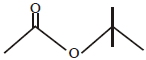
- B
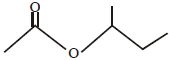
- C
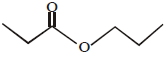
- D
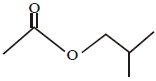
Explore More
Similar Questions
What is the product '$A$' in the following reaction?
(Image of an epoxide ring fused to a cyclopentane ring with an exocyclic double bond,reacting with $H_3O^{\oplus}$ to form $A$.)
(Image of an epoxide ring fused to a cyclopentane ring with an exocyclic double bond,reacting with $H_3O^{\oplus}$ to form $A$.)
Compound $(P)$ is
Medium
View SolutionWhich of the following compounds is more acidic?
Which alcohol of molecular formula $C_4H_9OH$ cannot be obtained by the reduction of a carbonyl compound?
Which of the following statements is correct regarding the rate of dehydration in alcohols?
Medium
View SolutionVedclass Products
For Students
Vedclass Test Series
Mock tests in real JEE/NEET style with performance analysis. 5-day free trial.
Start Free TrialFor Teachers
Exam Paper Generator
Generate Set A/B/C/D exam papers from 7.5L+ questions in 2 minutes. 3 chapters free.
Try FreeFor Institutes
Online Exam Module
Live online exams with unlimited students, 360° analytics & white-label branding.
See Demo