
Difficult
The cross-sectional area of a horizontal tube increases along its length linearly as we move in the direction of flow. The variation of pressure, as we move along its length in the direction of flow ($x$-direction), is best depicted by which of the following graphs?
- A
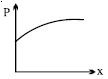
- B
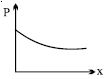
- C
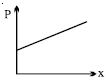
- D
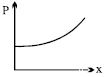
Explore More
Similar Questions
$A$ cylindrical tube,with its base as shown in the figure,is filled with water. It is moving down with a constant acceleration $a$ along a fixed inclined plane with angle $\theta=45^{\circ}$. $P_1$ and $P_2$ are pressures at points $1$ and $2$,respectively,located at the base of the tube. Let $\beta=(P_1-P_2) / (\rho g d)$,where $\rho$ is the density of water,$d$ is the inner diameter of the tube,and $g$ is the acceleration due to gravity. Which of the following statement$(s)$ is(are) correct?
$(A)$ $\beta=0$ when $a=g / \sqrt{2}$
$(B)$ $\beta>0$ when $a=g / \sqrt{2}$
$(C)$ $\beta=\frac{\sqrt{2}-1}{\sqrt{2}}$ when $a=g / 2$
$(D)$ $\beta=\frac{1}{\sqrt{2}}$ when $a=g / 2$
$(A)$ $\beta=0$ when $a=g / \sqrt{2}$
$(B)$ $\beta>0$ when $a=g / \sqrt{2}$
$(C)$ $\beta=\frac{\sqrt{2}-1}{\sqrt{2}}$ when $a=g / 2$
$(D)$ $\beta=\frac{1}{\sqrt{2}}$ when $a=g / 2$
$A$ cylindrical furnace has height $(H)$ and diameter $(D)$ both $1 \ m$. It is maintained at temperature $T=360 \ K$. The air gets heated inside the furnace at constant pressure $P_a$ and its temperature becomes $T=360 \ K$. The hot air with density $\rho$ rises up a vertical chimney of diameter $d=0.1 \ m$ and height $h=9 \ m$ above the furnace and exits the chimney. As a result,atmospheric air of density $\rho_a=1.2 \ kg \ m^{-3}$,pressure $P_a$ and temperature $T_a=300 \ K$ enters the furnace. Assume air as an ideal gas,neglect the variations in $\rho$ and $T$ inside the chimney and the furnace. Also ignore the viscous effects. [Given: The acceleration due to gravity $g=10 \ ms^{-2}$ and $\pi=3.14$]
$(1)$ Considering the air flow to be streamline,the steady mass flow rate of air exiting the chimney is . . . . .$g \ s^{-1}$.
$(2)$ When the chimney is closed using a cap at the top,a pressure difference $\Delta P$ develops between the top and the bottom surfaces of the cap. If the changes in the temperature and density of the hot air,due to the stoppage of air flow,are negligible then the value of $\Delta P$ is . . . . .$N \ m^{-2}$.
$(1)$ Considering the air flow to be streamline,the steady mass flow rate of air exiting the chimney is . . . . .$g \ s^{-1}$.
$(2)$ When the chimney is closed using a cap at the top,a pressure difference $\Delta P$ develops between the top and the bottom surfaces of the cap. If the changes in the temperature and density of the hot air,due to the stoppage of air flow,are negligible then the value of $\Delta P$ is . . . . .$N \ m^{-2}$.
DifficultIIT 2023
View SolutionWrite two parts of fluid mechanics and what studies are made in them?
Easy
View SolutionThe figure shows a three-arm tube in which a liquid is filled up to a height $l$. It is now rotated at an angular frequency $\omega$ about an axis passing through arm $B$. Find the angular frequency $\omega$ at which the level of liquid in arm $B$ becomes zero.
Difficult
View SolutionThe temperature of an air bubble while rising from the bottom to the surface of a lake remains constant, but its diameter is doubled. If the pressure on the surface is $h$ meters of mercury column and the relative density of mercury is $\rho$, then the depth of the lake is: (in $\rho h$)
Vedclass Products
For Students
Vedclass Test Series
Mock tests in real JEE/NEET style with performance analysis. 5-day free trial.
Start Free TrialFor Teachers
Exam Paper Generator
Generate Set A/B/C/D exam papers from 7.5L+ questions in 2 minutes. 3 chapters free.
Try FreeFor Institutes
Online Exam Module
Live online exams with unlimited students, 360° analytics & white-label branding.
See Demo