
Class 12Chemistry8-2.Carboxylic acids and Their derivativeMix Examples-Carboxylic acids and Their derivative
MediumWhich $\beta$-keto acid shown will not undergo decarboxylation?
- A
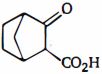
- B

- C$Ph-C(=O)-CH_2-CO_2H$
- D$CH_3-C(=O)-CH_2-CO_2H$
Explore More
Similar Questions
The major products $Q$ and $R$ from the following reactions,respectively are:
DifficultTS EAMCET 2021
View SolutionThe reaction sequence is:
$2-\text{hydroxycyclohexylacetone}$ $\xrightarrow{I_2/NaOH}$ $\xrightarrow{\Delta}$ $\xrightarrow{H^+}$ $\xrightarrow{\Delta} A$
$A$ is:
$2-\text{hydroxycyclohexylacetone}$ $\xrightarrow{I_2/NaOH}$ $\xrightarrow{\Delta}$ $\xrightarrow{H^+}$ $\xrightarrow{\Delta} A$
$A$ is:
Difficult
View SolutionEthanoic acid $+$ $3$-methylbutan-$1$-ol $\underset{\text{traces } H_2SO_4}{\longleftrightarrow} (A)$; Compound $(A)$ is
Difficult
View SolutionIn the following reactions,$P$,$Q$,$R$,and $S$ are the major products.
The correct statement$(s)$ about $P$,$Q$,$R$,and $S$ is (are)
$(A)$ $P$ and $Q$ are monomers of polymers dacron and glyptal,respectively.
$(B)$ $P$,$Q$,and $R$ are dicarboxylic acids.
$(C)$ Compounds $Q$ and $R$ are the same.
$(D)$ $R$ does not undergo aldol condensation and $S$ does not undergo Cannizzaro reaction.
The correct statement$(s)$ about $P$,$Q$,$R$,and $S$ is (are)
$(A)$ $P$ and $Q$ are monomers of polymers dacron and glyptal,respectively.
$(B)$ $P$,$Q$,and $R$ are dicarboxylic acids.
$(C)$ Compounds $Q$ and $R$ are the same.
$(D)$ $R$ does not undergo aldol condensation and $S$ does not undergo Cannizzaro reaction.
MediumIIT 2023
View SolutionMatch List-$I$ with List-$II$.
List-$I$ (Name of reaction) List-$II$ (Reagent used) $A$. Hell-Volhard-Zelinsky reaction $I$. $NaOH + I_2$ $B$. Iodoform reaction $II$. $(i) CrO_2Cl_2, CS_2; (ii) H_2O$ $C$. Etard reaction $III$. $(i) Br_2 / \text{red phosphorus}; (ii) H_2O$ $D$. Gatterman-Koch reaction $IV$. $CO, HCl, \text{anhyd. } AlCl_3$
Choose the correct answer from the options given below:
| List-$I$ (Name of reaction) | List-$II$ (Reagent used) |
| $A$. Hell-Volhard-Zelinsky reaction | $I$. $NaOH + I_2$ |
| $B$. Iodoform reaction | $II$. $(i) CrO_2Cl_2, CS_2; (ii) H_2O$ |
| $C$. Etard reaction | $III$. $(i) Br_2 / \text{red phosphorus}; (ii) H_2O$ |
| $D$. Gatterman-Koch reaction | $IV$. $CO, HCl, \text{anhyd. } AlCl_3$ |
Choose the correct answer from the options given below:
Vedclass Products
For Students
Vedclass Test Series
Mock tests in real JEE/NEET style with performance analysis. 5-day free trial.
Start Free TrialFor Teachers
Exam Paper Generator
Generate Set A/B/C/D exam papers from 7.5L+ questions in 2 minutes. 3 chapters free.
Try FreeFor Institutes
Online Exam Module
Live online exams with unlimited students, 360° analytics & white-label branding.
See Demo